
How to Find My Property Line Without the Hassle
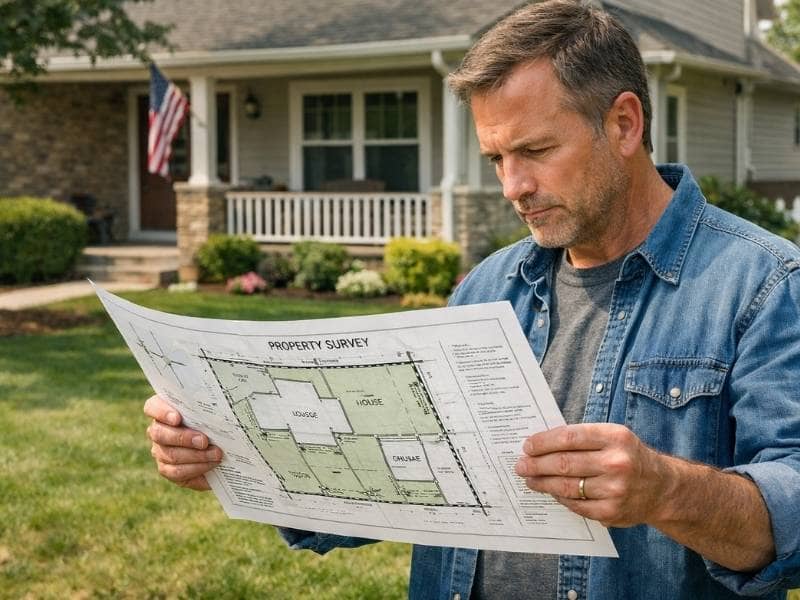
If you have already pulled up your deed or checked your county records and still feel confused, you are not alone. Finding your property line is one thing. Understanding what it actually means for your property is another. This article focuses on the part most homeowners skip, which is what to do with the information once you have it, and how to avoid the common mistakes that cause real headaches down the road.
Why Property Lines Are More Complicated Than They Look
A property line on paper and a property line on the ground are not always the same thing. Over the years, fences get built in the wrong place, driveways creep over the edge, and trees grow across boundaries without anyone noticing. In Denver, where older neighborhoods like Congress Park, Sunnyside, and Globeville have properties that have changed hands many times over decades, this is more common than you might think.
The challenge is not just finding where the line is. It is understanding what sits on or near it, what rights other people may have across it, and what rules apply to how close you can build to it.
Understanding Easements on Your Property
An easement gives someone else the legal right to use a portion of your land for a specific purpose. Finding your property line does not mean everything inside it belongs entirely to you in every way.
Common easements found on properties include:
- Utility easements. These run along the rear or sides of many lots and give utility companies the right to access underground or overhead lines. You generally cannot build permanent structures inside a utility easement.
- Drainage easements. These protect natural or engineered drainage paths. Building inside one can cause flooding problems and legal issues.
- Access easements. These allow a neighboring property to cross your land to reach a road or shared resource.
Easements are listed in your deed and shown on the subdivision plat. When you are trying to figure out where you can build or what you can do near your property line, always check for easements first. They apply regardless of where your boundary line sits.
What Are Building Setbacks and How Do They Affect You?
A setback is the minimum distance a structure must be placed from your property line. In Denver, setbacks are set by local zoning regulations and vary depending on your zone district.
As a general reference for Denver residential zones:
- Front setbacks typically range from 20 to 25 feet from the front property line
- Rear setbacks are commonly 5 to 15 feet depending on the zone
- Side setbacks are often 5 feet for single-family homes
This means even if your property line is clearly established, you may not be able to build right up to it. Before starting any construction project, check your zoning designation through Denver Community Planning and Development. You can look up your zone district and applicable setbacks using the Denver Zoning Map available on the city website.
How Encroachments Affect Your Property Line
An encroachment happens when a structure from a neighboring property crosses over your property line, or when your structure crosses over onto theirs. In Denver, encroachments come up frequently during real estate transactions and can complicate sales, refinancing, and construction projects.
Common examples include:
- A neighbor’s fence sitting six inches inside your property
- An overhang from a garage that extends past the property line
- A driveway that widens onto adjacent land over time
If you suspect an encroachment, measuring from a plat map or GIS tool alone will not be enough to confirm it. The only way to know for certain is through a boundary survey by a licensed professional land surveyor. An encroachment that goes unaddressed for years can sometimes lead to adverse possession claims under Colorado law, which is a legal process where someone can claim ownership of land they have openly used for an extended period.
Reading Your Lot Dimensions Correctly
When you pull up your plat or deed, you will see measurements listed in feet along each boundary line. Here is how to make sense of them:
- Each boundary line has a bearing, which is a compass direction, and a distance measured in feet.
- Lines are described in sequence, starting from one corner and moving around the perimeter until returning to the starting point.
- The total should add up to a closed shape. If it does not, there may be an error in the description.
For example, a line described as “North 45 degrees East, 120 feet” means you travel in that compass direction for 120 feet along that boundary. Following all the lines in order traces the full outline of your lot.
If your deed uses older language or references landmarks that no longer exist, interpreting it accurately may require professional help.
Common Mistakes Homeowners Make
Knowing what not to do saves time and money. Here are the mistakes that come up most often:
- Assuming a fence marks the boundary. Fences are often placed incorrectly and have no legal standing as a property boundary marker.
- Trusting a neighbor’s word on where the line is. Even with good intentions, neighbors can be wrong. Verbal agreements about property lines are not legally binding in Colorado.
- Using a GIS map to make construction decisions. GIS boundaries are approximate and can be off by several feet. Building based on a GIS line alone is a risk not worth taking.
- Ignoring setback rules. Building too close to a property line without checking zoning setbacks can result in a stop-work order or forced removal of the structure.
Frequently Asked Questions
What is the difference between a property line and a setback line?
A property line marks the legal boundary of your land. A setback line is an internal boundary set by zoning rules that determines how close you can build to your property line. You own the land between them, but you generally cannot build on it.
Can an easement be removed from my property?
In some cases, yes. Easements can be terminated through a formal legal process if they are no longer needed or if both parties agree. This typically requires a real estate attorney and may involve filing documents with Denver County.
What is adverse possession and should I be worried about it?
Adverse possession is a Colorado law that allows someone to claim legal ownership of land they have openly, continuously, and exclusively used for at least 18 years without the owner’s permission. If a neighbor has been using a strip of your land for many years, it is worth having a surveyor confirm your boundary lines sooner rather than later.
Do I need a permit to install a fence along my property line in Denver?
Yes, Denver requires a fence permit for most fence installations. The permit process also involves confirming that the fence is placed within your property and meets height and material requirements for your zone district.